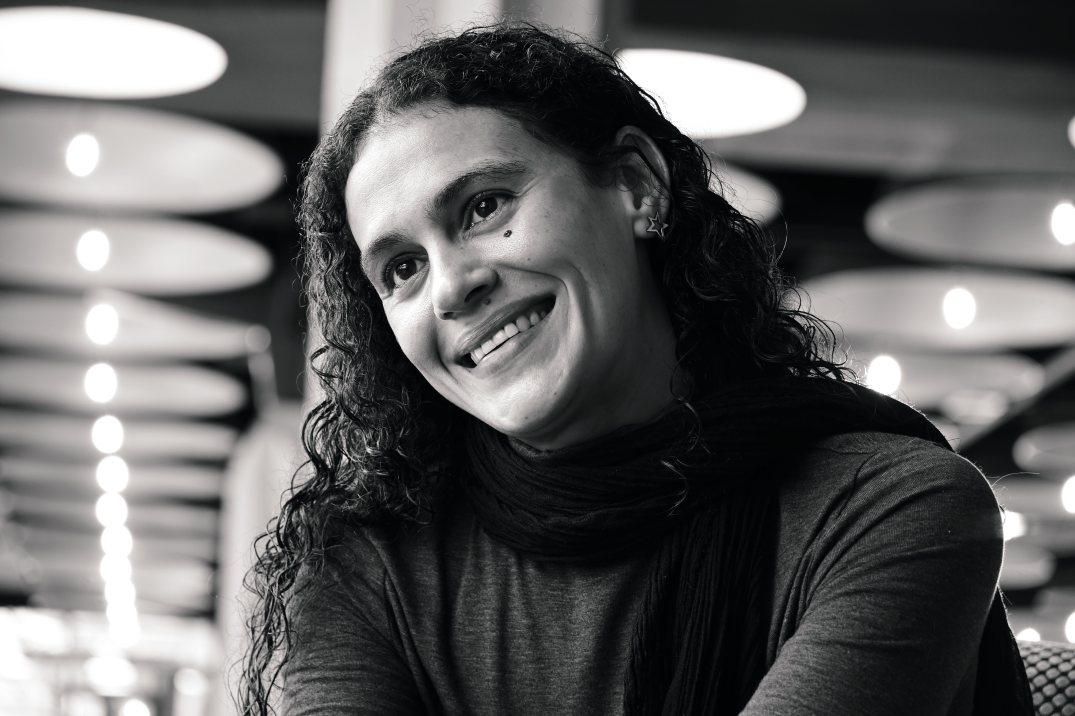
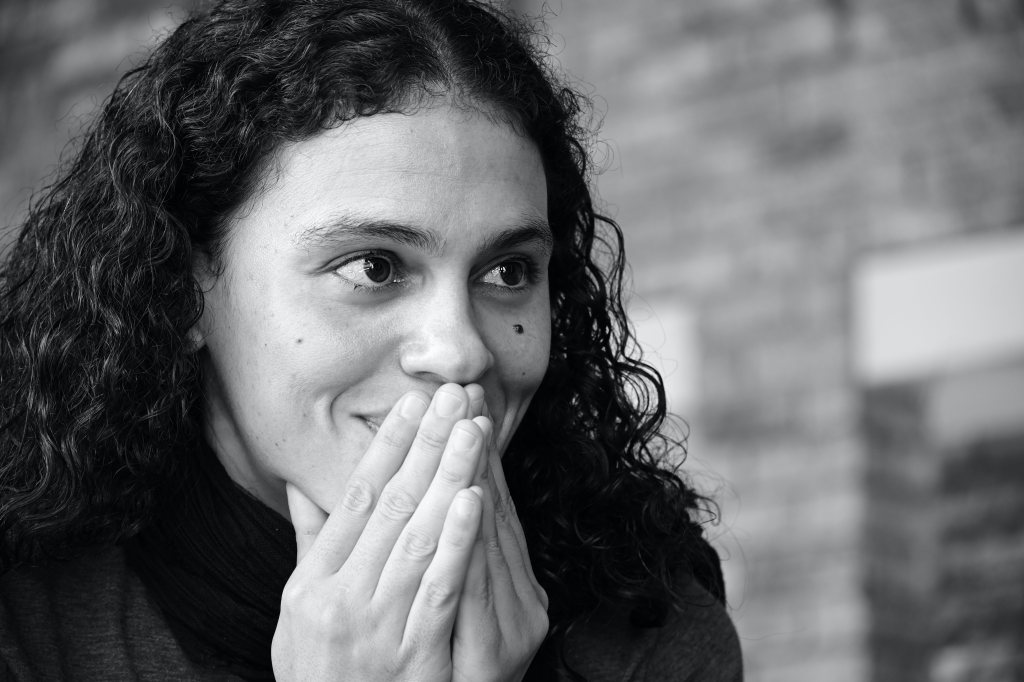
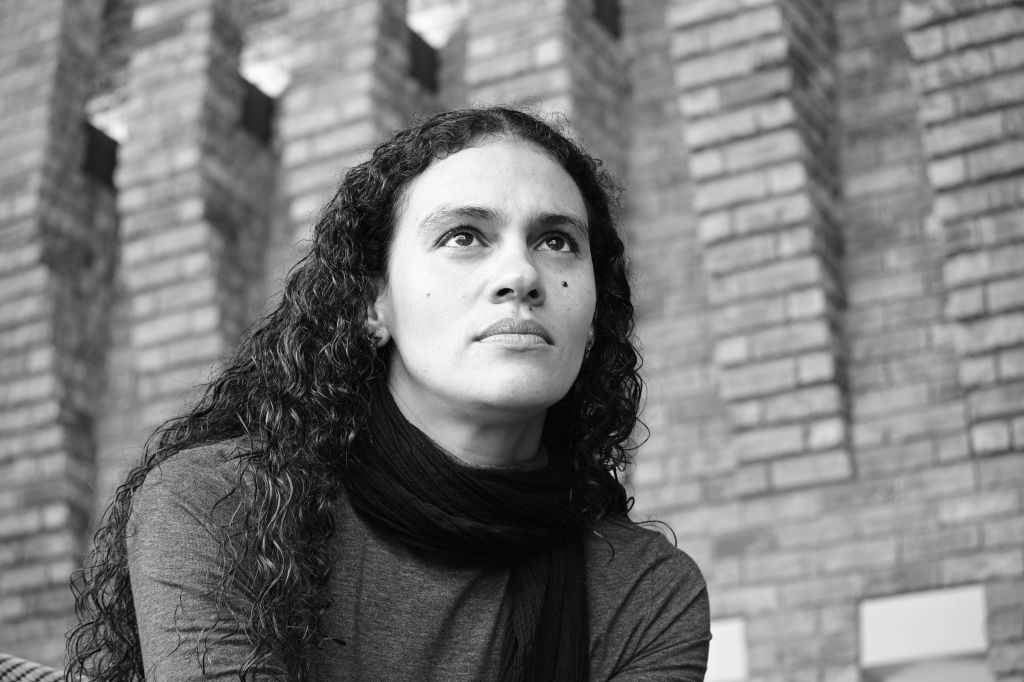
Danica De La Rey Jones is a magnetic force in the South African film industry. With over a decade of industry experience, Danica has built a career defined by high-stakes performances and an unflinching emotional range. Her transition from arthouse darling to commercial powerhouse was cemented with her lead role in the action feature Hunting Jessica Brok. Performing her own gruelling fight choreography with only two weeks of prep, Danica proved herself as a high-octane physical performer. She is currently starring as “Tessa” in the South African premiere of Suzie Miller’s internationally acclaimed one-woman play, Prima Facie.
Who or what inspired you to pursue a career in the arts?
So many different people and things, but I naturally had a knack for it from very young. I’d set up my dolls and teddy bears, and my mum and dad would get yanked into it too. I just always had something to say and wanted to perform. They were very encouraging. They always gave me an audience. I remember watching Annie for the first time at the Playhouse Theatre. I think I must have been seven or eight years old. I had watched Annie before. It was a favorite film in our household with my cousins who knew all the songs, we would jump on the couches and we’d all be assigned a character and pretend. I remember watching it at the theatre, and I couldn’t believe it. This Annie was different. Her skin color was different, she wasn’t the Annie I was used to seeing, but she was Annie. I could not believe she was right in front of me. It felt magical. I felt connected to her. I felt part of that world. I couldn’t believe that as she was experiencing things, I could see them. I could see what she was seeing, and I just remember thinking, “Is that really Annie?” And my mom was like, “Well, no, not really. It’s an actress.” And I was like, “What is that? What does that mean?” I think that was the first time I was like, “Wow, this is actually something.” I don’t think I even understood it fully then. I think that was the first time I was exposed to acting and heard the word actress and the theater. It just it was mind blowing.
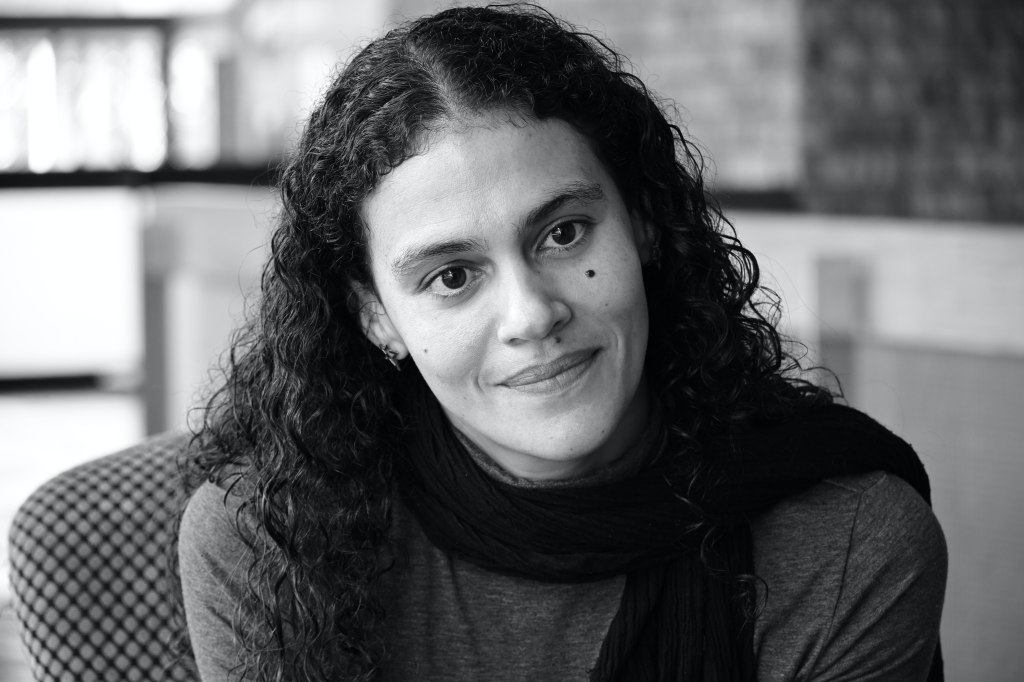
I listened to an interview that you did where you spoke about how you did not enjoy the more academic side of school. Do you feel like you were encouraged to go towards a performing career at all?
My mom, very early on, picked up that I love drawing and I love writing. I would just write poems about how I felt. I was a very emo kid. My mom and dad were going through a divorce and that was when I think my artistic side just went to a new level of expression, firstly, because I used to act like I was sick to get out of school, because I really didn’t want to explain how I felt. But I also wrote a lot and I drew a lot. My mom is a teacher and very early on, she saw that artistic part of me and nurtured it and supported it. I’m from Pietermaritzburg. You can join a little dance school and you try, but she was a single parent and so I didn’t really get a lot of exposure to the arts like I wish I had. I had my little home with my mom buying us paint and all my teddybears, and mom sitting watching me become Britney Spears every weekend. That felt like enough. My mom really held that very preciously and she never once said, “Don’t. No. You can’t do that. You need to go in this direction.” She was very much like, “I think this is you. So I’ll hold that for you, with you.” She was at every show, every late night thing. She held it like a precious part of me, even when I didn’t want to hold it sometimes.
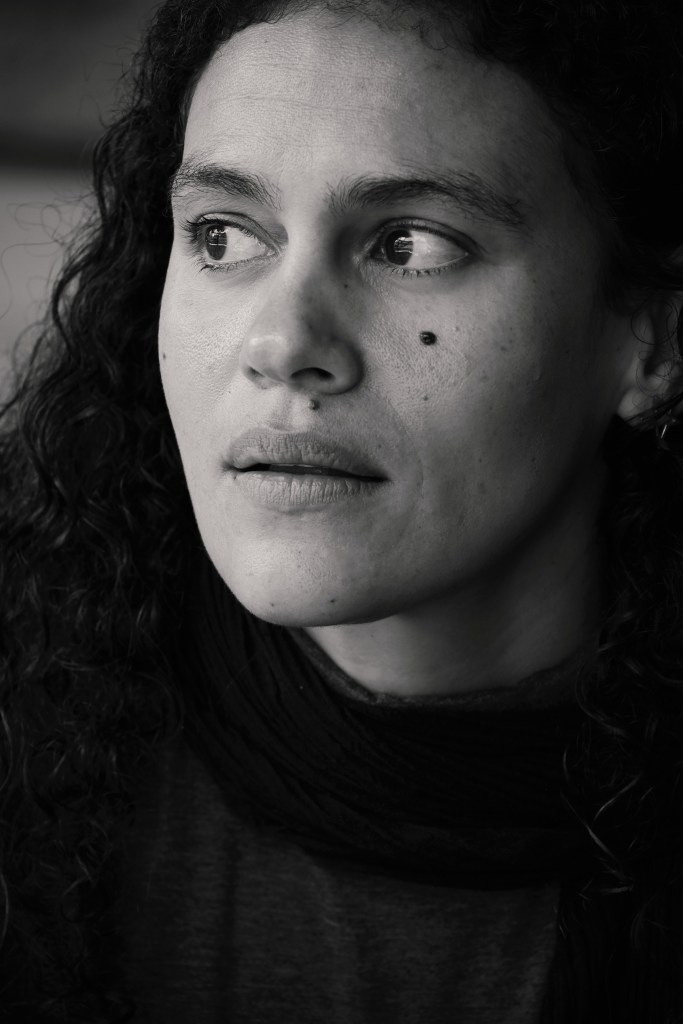
I read that you didn’t study performing in a tertiary sense, but that you opted for “real life experience.” That description keeps coming up in a lot of introductions about you. I was wondering if maybe you could chat a little bit about that?
I actually did sign up and got accepted into DUT and I was there for a term. But in first year, my life just… I made so many bad decisions. I became a statistic. That’s all I’ll say about that. And I left and I remember Debbie [Lutge] who was the head of the Drama Department, sat me down and she was like, “I promise you this is your calling. It will change your life. I know it feels painful. I know you feel like you can’t go on but just stay.” And I was like, “Nope, I’m out.” It’s not that I opted for life experience, but man, I ran into life, set myself on fire and I learned a lot. I got hurt along the way. And then, when I had to meet acting again, it was in the strangest way. A friend of mine who is also a spectacular theatremaker, Menzi Mkhwane, he was a good friend of mine in school. He got the theatre award for theory and I got it for practical in high school. I remember I was going to my job where I was a PA. I was getting paid R3000 a month. I had a two year old. I was standing in Pietermaritzburg at a stop sign and it looked like it was going to rain and I was like this feels like a film honestly, and in my mind I’m like, “God, please just send me a sign.” I just started crying right there in the middle of town in Pietermaritzburg and my friend Menzi was catching a taxi to Durban to go do a gig and he was like, “Buddy, why are you standing in front of a stop sign crying?” And I was like, “Because it feels ironic and it just feels really fated for this moment.” He was like, “I’m writing a play and there’s a role for you. But keep doing what you do. Don’t give up.” He was with me in Courtyard when all of that stuff was going down and I left and he stayed and he went on to do great things. I went to work that day and the call didn’t come and I thought, “Well, perfect.” Two years later, the call came and he said, “I finished the play and there’s a role for you.” At that time I was staying in Durban. My life had shifted slightly. And he said, “Read the play and tell me which character you think you need to play. I said, “Kivu, because she’s feisty and passionate and angry and I think I am all of those things.” He was like, “You’re none of those things. You are gonna play Naomi. She holds the stage in stillness and I think you don’t see yourself. But trust me.” We read it, and again I had this choice to make. I came to a fork in the road again. It was our final dress rehearsal for the play and I got a phone call that my uncle, who was like my father figure, everything to me, my best friend, had committed suicide. I was going to go on stage the next day and I remember thinking I’m really not meant to do this. Every time I act, something really terrible happens. I remember Menzi telling me, “Buddy, you don’t have to do this. I can do the role. I wrote it. I’ll be Naomi. I’ll change the name.” I just had this feeling that came over me, like this calmness, and I was just like, “I have to do it. I don’t know why, but I have to do it.” The funny thing about Naomi, her role was that she needed to connect the real world to the spiritual world and her role as an oracle was to guide the fallen people to their resting place. You cannot make it up. I remember doing that final dress rehearsal, and I got to a point and I could not stop crying, and the Playhouse Theatre people were watching and then Menzi explained to them afterwards and they were like, “We’ve never seen such resilience on the stage before. Never in all our years. Someone’s standing there, doing everything that they can, fighting on that stage for that moment.” Then it was opening night and at the end of it all I won a Durban Theater Award for Best Supporting Actress. I never ever felt like it was mine. It always feels like it is so out of reach, even if someone gives it to me. I always feel like I’m chasing it somehow. That’s what I mean about life, like it’s not me and it is, but every time I try to hide from it, it finds me. Even in this role, I me.
How did this role in Prima Facie come about?
I was about to give up acting. Again. It’s like every second Tuesday. And then this brief lands in my email and I read it, and I felt like I had nothing left in me. I had done a role that traumatized me more than I thought it would, and I had to deal with what that meant for me. I kind of got a bit shattered by what it means to do something traumatic and have it played back to you and not realize what it meant in the moment. It’s hard. I think that’s why I don’t watch my own work. I think that’s why I kind of like theater, then I can leave and I don’t have to think about it being played back to me in some way. It feels more like it’s just for that moment and what happened in that moment is real and true and whatever it meant in that moment. The brief was there and again, I felt that feeling and I was like, “No, I can’t, I don’t have anything left.” I was shooting something in Cape Town. I go back to Joburg, I learn the lines and it was like I knew what the character was going to say next. I never perform anything for my husband, I just run lines with him and then I go in and audition, but this time, I actually just showed him and he burst into tears and he was like, “I think you’re meant to do it.” I get in to the audition room, I’m a screen actor- you go in, introduce yourself, you do the thing and they’re like, “We’ll be in touch,” and then they don’t. You can walk out there crying, and you gave your heart and soul in that audition room and no one cares. And [in this audition] they were like, come and sit down, tell us more about yourself. I thought that was the end of it. They’re just kind, lovely people. Then I got a callback and I saw who was on the callback list and I was like, “Well, I’m definitely not getting this.” I just thought to myself, there is no way. So I just went in there and I was like for the moment, I am gonna live in the truth of what the story means for me. There is nothing at stake here. Just the truth to live in this moment for one last time and leave it there and move on. And it feels cathartic. Then they called me and told me that I got it and I was like, “You’re lying.” I sat in that for a while and now I’m doing it.
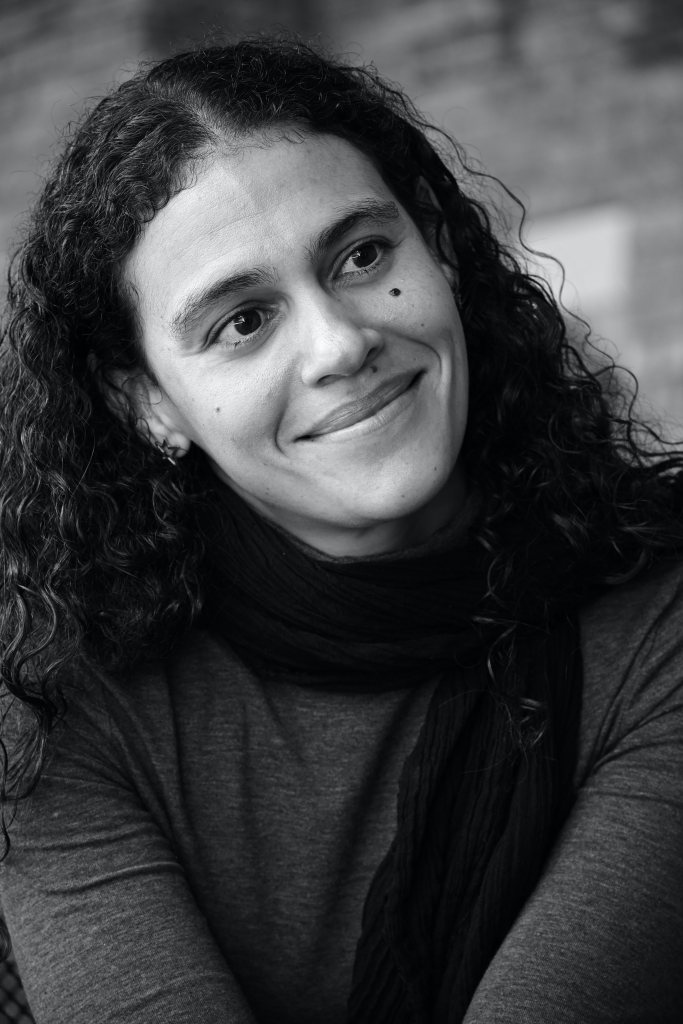
It was just such a profound experience to watch you in this role. I think the question I have for you, that Im sure everybody has, is how do you do this every night and twice on Saturday? I heard your process to get ready for a show is intense, but how are you doing this? And how are you taking care of yourself as a person?
I have got the best, most incredible people around me. So that helps. I’ve got friends who just come in and will be like, “Let me make you some tea and we’re gonna talk about things that have nothing to do with anything.” But I think what I’ve been realizing, about how I’ve been called to do this work, for me specifically, in every single job that has called me, I have had to hold my personal trauma and personal experience alongside very parallel to a character who has to hold it quite differently to the way that I hold it. And it unlocks things in me that I never knew I had. I’ve always been fit. I’ve always tried to [stay fit] because I got called into Action. I was never an Action actor. I’m actually very clumsy and I’m neurotic. I overthink everything and in Action you cannot overthink anything. You have to just be so solid in your conviction of everything. Action called me and I was like, “This feels like a bad joke.” I think boxing helped my diaphragm because of the breathing. That really helped. There’d be times I’m like, “I can’t breathe anymore.” And my husband was like, “It’s like good, because you’re not going to be able to breathe on stage. Find your breath, find your calm, keep moving, keep going. You’ve got this. You’ve got a warrior’s spirit. You have to fight for every moment on that stage.” I think that’s what it is. I’m a fighter. I didn’t know I was, but naturally I am. I fight for every breath and every moment on that stage. The preparation… I was grateful, I actually got a hip injury so I couldn’t walk for like 2 months before the show. When people say high stakes performance and everyone’s always been like, “Danica, you can do hard things.” And I was like, “Does it always have to be hard though?” A RomCom would be kind of cute. But I realized for that moment, my body needed to relax and I needed to sit with the script and kind of do the healing with what that meant for me, for that time. My body was telling me to stop moving. You need to be still with the script and really decide how you’re going to move with it and hold it. The body is an amazing thing I believe it is. I went for all the healing and I just wasn’t getting healed and then I went to therapy and then my hip got better. It was a lot of sitting with the script and really understanding truthfully, where I felt triggered. The hardest part for me funny enough, was to keep the actual rape scene going without breaking down. She talks throughout the rape. You cannot have a moment to just break in that moment. You have to keep it going and if you cry, your nose gets blocked, everything closes up. I’ve had a couple of shows where it just catches me and I end up breaking. Then I’m squeaking and sniffing and trying to breathe through it, but if I can get through this moment, I will be able to get through every moment after this, and I’ll hold it differently. I will. I’ll hold my audience stronger from this moment on because it’s my responsibility to. But there are times. I feel like every show is different. It catches me off guard sometimes and I’m like, “Why is my voice quivering here?” I need to hold it, but am I holding Danica or Tessa? Danica’s coming through, ok Tessa I need you to step up. Let’s go. I think sitting with the script, being really honest about myself to myself about what it meant for me and really allowing myself to feel what it meant for me to me. Truly. Every time I read the script, if I needed to cry I would. And then therapy, family, boxing, running. My son, my puppy, my husband, my mom, just holding me always. I feel very supportive and I have beautiful incredible friends around me and actresses that I’ve never met before, just extending kindness in ways that I’ve never experienced in my life ever.
Is this your first one person show?
Yes.
Having just done a one-woman show myself, I was wondering if you could talk a little bit about the psychology behind it?
It feels like you wanna run away before you get onto stage. You’re in two minds. It’s almost like the character’s pulling you but then your natural reaction, your heart is beating out of your chest and you feel like you’re being torn into two parts, like you could just run away and this whole thing would just like settle. But there is this assignment to the story, and so you feel like you’re being split into two until you hear, “Welcome to the Baxter Theatre.” And then you’re like, well, now there’s no time. Then I hear that first [sound cue] and immediately Tessa is there and I’m holding her and she’s holding me and I feel like we walk on to stage together. I walk her to the door and she’s like, “I’ve got this” and she takes over. That’s how it feels. It’s like me fighting with her like, “I can’t do this” and she’s like, “You’re not supposed to. It’s me. I’m gonna do it.” The hardest parts of the play for me, that Neil [Coppen] battled with me with, was was being so strong in the beginning. That for me was hard. Being real is okay. I don’t feel like my natural self. I’m very quirky and Neil was like, “I need you to walk on there like you own it.” And I’m like, “I don’t know what that means.” And then, my first preview something happened where I felt Tessa more prominently in me than I’d ever felt her before. She just walked out there. My first preview was only the third time that I’d run the play through fully. So I was like, “I don’t know Im going to do this. But allegedly, I can do hard things. So let’s test the theory.” It was difficult, and then my second preview, I dried up on stage in the second monologue. I completely lost a line and had no idea what to do in that moment. So I got up, walked off stage, and Tessa was like, “Absolutely not.” It took me all of five seconds. I walked back on stage and I finished the play. And the people who stood up and screamed and cried at the end of that performance, I was shocked because I felt like I had disappointed them. And they were like, “We’ve never seen an actor just like decide to run off and then come back on and be like no, I’m finishing the show.” It was insane. The psychology is: I want to run away. And then you have to constantly meet it every day and say, I am choosing because I am assigned to tell the story. Someone needs to hear this story. It’s bigger than me. And I know once I say “Thoroughbreds”, I’m safe.
It’s such an extraordinary feat and over two hours long. Ive read that the Broadway and West End productions were about 90 minutes, so what has been changed? I know that it has been localized as well.
Jodie Comer’s one is one hour, forty minutes. But what she does is, the lights don’t go down. She just goes. She literally goes from “Thoroughbreds. Today I was a winner. Today I came first.” It’s like a beat and then she goes into the next monologue and into the next. So there’s no breath, no process, no music in that moment. She’s moving everything around in process and just hammering it through. Whereas Neil was like, the audience needs to process. You need a moment to just move things, go back, step into the next moment. Every moment deserves its moment. That’s what I think has made it longer. We’re not going in one after the next. I think that’s what it is, but we didn’t change much at all, except for localizing it a bit, removing the jury. I think there’s one line that we had to cut out because there’s no jury in South Africa but everything has pretty much being kept the same to the point where I think people even said, “But you wouldn’t sit in a witness room. When you go to court, you’re sitting on a plastic chair waiting to go in and no one cares.” There was a lot that we wanted to change, but even then, they had to write an email really asking [Suzie Miller] if we could. I think we’re the only country in the world that has been given the right to localize it and change specific things, because everyone has done it in different languages, but they’ve done it in the context of the play. So even in China, they perform it as if it’s Liverpool or whatever, but in Chinese. They do it in their language but they haven’t changed the play and we’ve changed where its set. We tried to give it a piece of everything, she goes to UCT, so then Cape Town feels involved but then she’s now moved to Joburg, which is my story. I’m from KZN but I live in Joburg. And then with the accent, you find like a lot of people from KZN recognising it. I think I get some confused looks from some Capetonians, but then they finally get into it and feel who she is. It’s almost like I’m representing a piece of everyone a little bit, which is what we kind of wanted to do. It is a long show, but I do think it’s because we’ve taken moments to let the audience breathe.
I saw it on opening night and learned that it was going to be two hours long. Neil Coppen actually walked past us and said, “People are going on and on like it’s The Odyssey.” But I think we need to remind ourselves that seeing something like this is almost like a feat of athleticism on stage. To see something like this, and the way that you held us for that duration, is extraordinary, and it’s not something that happens all the time. I remember walking out of the show saying, we are very lucky with what we just witnessed. It blew me away. You blew me away. And it’s worth mentioning, in the context of the show, that we are currently three women sitting here right now and in the show you talk about the statistic of 1 in 3 women.
I’m emotional today. I have never gotten my flowers in anything, and I got so many flowers on opening night. I just sat in my bedroom and cried because I feel like I’ve done works that are overlooked. And that’s how it is sometimes, and you just keep moving and you keep your head down. But then I realised that when people pay too much attention to me, that makes me uncomfortable as well. So I’m like, “What is it that I’m searching for?” And I’ve had to have this chat with myself and it’s the purpose and the assignment to story like, what does it mean? I’ve had people come up to me and tell me, “You’re telling my story. It was mine,” and I look at them in that moment and I feel so strong in that moment. But when I go home I’m just me. Tessa is the strong one. Tessa is the one that everyone is looking at and thinking, “Wow she’s so strong.” I go home to me, and I sit with that and I think, “Can I do it again?” Every day I ask myself that. I have never reconciled it in my mind that I’ll be able to do it again. My stage managers is like, “I’ve never met an actress like you, honestly.” I come in four hours before so I can walk the show by myself, with my words, and do every single movement, do everything and be like, “Okay now I have proof that I can do it. So I’ll do it.” I just want to prove once a day that I can do it and then I’ll do it at night.
Originally, when I used to run Sarafina Magazine, I never asked women about motherhood because I felt that men weren’t getting asked about fatherhood so I wasnt going to ask women that question. However, since my last interview back in 2020, I’ve had a little one of my own. And I feel like I can’t not ask about how it’s informed you as an artist, because for me, it was such a a big cellular shift. So that’s the reason that I want to ask: how do you feel motherhood has informed you as as an artist?
Wow. I feel like what it’s done is it’s given me something to grasp onto that is an embodiment of the nurturer and the warrior as one. It’s fleshed me out in ways that I never expected it to. I have an empathy and a sympathy for everything and everyone more than I think I would. I also feel, and I’ve been given this a lot, people often say I’m very giving. If I am holding other actors, even if I’m off camera, if my character cried on camera, I’m crying off camera, because you also need to respond to what that meant in that moment. I will stand in. People will be like, “I can do it to a tennis ball. It’s fine.” And I’m like, “But I’m here.” I think it’s that thing of being able to hold so much. It fleshes you out in ways where you realize that things are bigger than you, and also, that they are a part of you in so many different ways. It also makes me think of every single person as being an extension of me, so be it to say. But it does feel that way because I look at my son, he’s 15 now. I look at him, I had him when I was 21. I look at him and he’s this man. And even in this play, I wonder what that means. I ask him often, “Do you know what it means? Do you know what it means to be a man? Do you know what it means for a woman to experience you? What do you know?” He watched something that I was in where my character got hurt a lot, but he loves Action and his visceral responds to that was heartbreaking because in the beginning he was like, “Go, mom, Kick ass!” And then he got to a point where my husband said he just shrunk a bit. Because as everyone sees you as “Jessica Brok,” he sees his mom. So, I was like, “Okay, he’ll watch the Jodie Comer version and he won’t watch this version.” Simply because my mum even said it was so painful to watch because it was like, “It’s Tessa, no it’s Danica, no, it’s Tessa.” And as people who know you and know your journey and your story, it’s hard. I think it’s informed that something is bigger than me. Something’s always bigger than than me. And he is, he’s bigger than me for this moment. What am I saying to him? What am I holding for him in this moment in my art, in the way that I show up in the world. And how he has watched that; every failure, every “No,” every opportunity, every hard thing, coming home with bruises all over my body after shooting an Action film for 14 hours, six days a week. And him just being like, “I’m gonna make you a couple of tea. and I’m gonna sit by you silence.” I look at moments like that, and I’m like it’s always bigger than me. The moments exists beyond the moment, I think it is. The moment I think it’s big and massive and I’m never going to walk out of this moment again, I get home to my couch with my son and a cup of tea and the world keeps spinning. I think that’s how it’s informed my career. Nothing feels so detrimental anymore. Nothing feels like it can be taken because I have I have so much just there anchoring me down beyond that moment of something feeling insurmountable.
Who are some South African women in the arts who inspire you?
Where do I begin? I have so many peers who I am inspired by. I love Faniswa Yisa, Altovise Lawrence, Kim Engelbrecht, Lorcia Cooper, Kim Cloete, Jennifer Steyn, Dorothy Ann Gould, Camilla Waldman, Tholo Dlamini, Minenhle Sikhosana Pheta, Mpume Mthombeni, Charmaine Weir Smith, Julie-Anne McDowell Hergarty, Thuso Mbedu, Mamarumo Marokane.
Prima Facie runs at the Market Theatre until 4 October 2026. Tickets can be booked via Webtickets.
Special thanks to Christine Skinner.
Photos taken by Candice van Litsenborgh at the Baxter Theatre on 19 August 2026.
Candice van Litsenborgh maintains copyrights over all images. For inquiries and usage, contact us.

